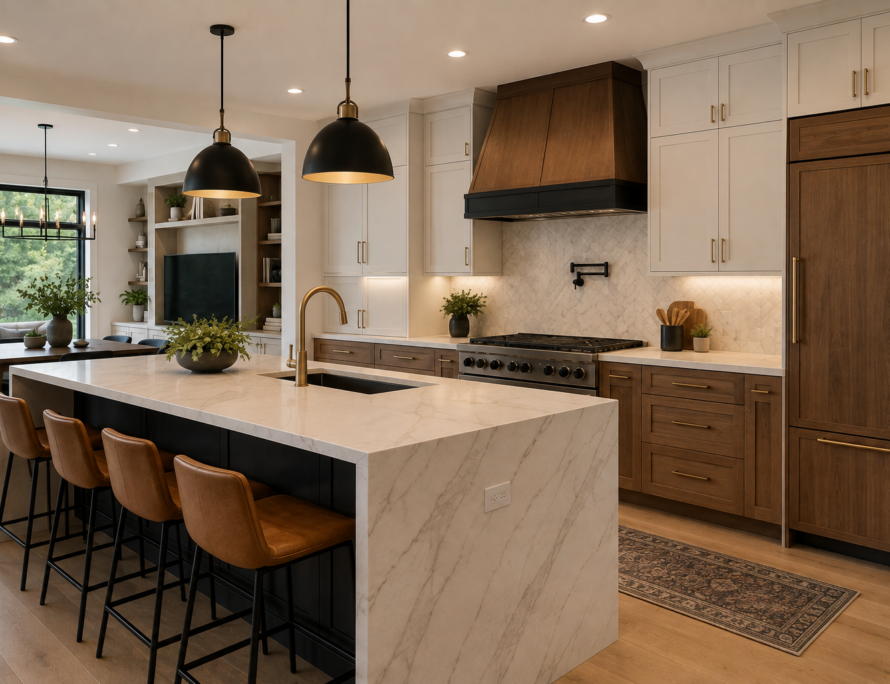
It’s easy to overlook, but kitchen cabinet hardware finish choices tie an entire kitchen design together. Chrome, nickel, and stainless steel each bring a distinct look and level of maintenance. Here’s how to choose the right finish for your Bellevue or Kirkland kitchen. The right kitchen cabinet hardware choice ultimately comes down to your cabinet color, your appliance finishes, and how much daily wear the hardware will see.

Chrome: Bright and Reflective
Chrome kitchen cabinet hardware has a bright, highly reflective shine that pairs well with white or gray cabinetry and modern, minimalist kitchens. It’s one of the more affordable hardware finishes, though it can show fingerprints and water spots more readily than brushed finishes, requiring more frequent cleaning to keep its polished look. A quick wipe-down after cooking usually keeps chrome hardware looking new.
Nickel: Warm and Versatile
Brushed nickel kitchen cabinet hardware offers a softer, warmer tone than chrome, with a matte finish that hides fingerprints and light scratches well. This versatility makes nickel one of the most popular choices across both traditional and transitional kitchen styles, and it pairs easily with a wide range of cabinet colors. Because nickel hides everyday smudges well, it’s often the lowest-maintenance option for busy households.
Stainless Steel: Durable and Consistent
Stainless steel kitchen cabinet hardware is prized for its durability and resistance to corrosion, making it a practical choice for busy kitchens. It also tends to match stainless steel appliances more precisely than chrome or nickel, creating a cohesive, coordinated look throughout the space. This makes stainless a strong pick for kitchens where hardware sees heavy daily use. It also resists tarnishing better than most plated finishes over years of use.
Mixing Finishes Intentionally
Modern kitchen design increasingly embraces mixing metals rather than matching every finish exactly. Pairing brushed nickel kitchen cabinet hardware with stainless steel appliances and matte black fixtures, for example, can create a layered, custom look. The key is choosing one dominant finish and using the others as accents rather than mixing in equal amounts.
Mixing Finishes the Right Way
Mixing two kitchen cabinet hardware finishes, like matte black pulls with brushed brass accents, has become a popular way to add depth without overwhelming the space. The key is intention: pick one finish for the majority of cabinets and reserve the second for an island, a hutch, or open shelving so the mix reads as deliberate rather than mismatched. Testing a finish sample under both daytime and evening kitchen lighting also helps confirm the choice before ordering hardware for the whole kitchen. Sticking to two finishes total keeps a mixed-metal kitchen looking cohesive rather than cluttered.
Sizing and Placement Basics
Beyond finish, the size and placement of kitchen cabinet hardware affects daily usability as much as appearance. Longer bar pulls generally work best on wider drawers, while knobs suit smaller doors and upper cabinets. The National Kitchen and Bath Association recommends mounting pulls and knobs at a consistent height across all cabinetry, a detail that’s easy to overlook but makes a noticeable difference in how polished a finished kitchen looks.
Getting Expert Guidance on Hardware
Choosing the right kitchen cabinet hardware is easier with samples in hand next to your actual cabinet finish and countertop. Our custom cabinet team helps Bellevue and Kirkland homeowners select hardware that complements the full kitchen design. Reach out for a free consultation to explore options. At Renovation WA, we help clients narrow down kitchen cabinet hardware choices quickly by bringing curated finish samples directly to the job site.