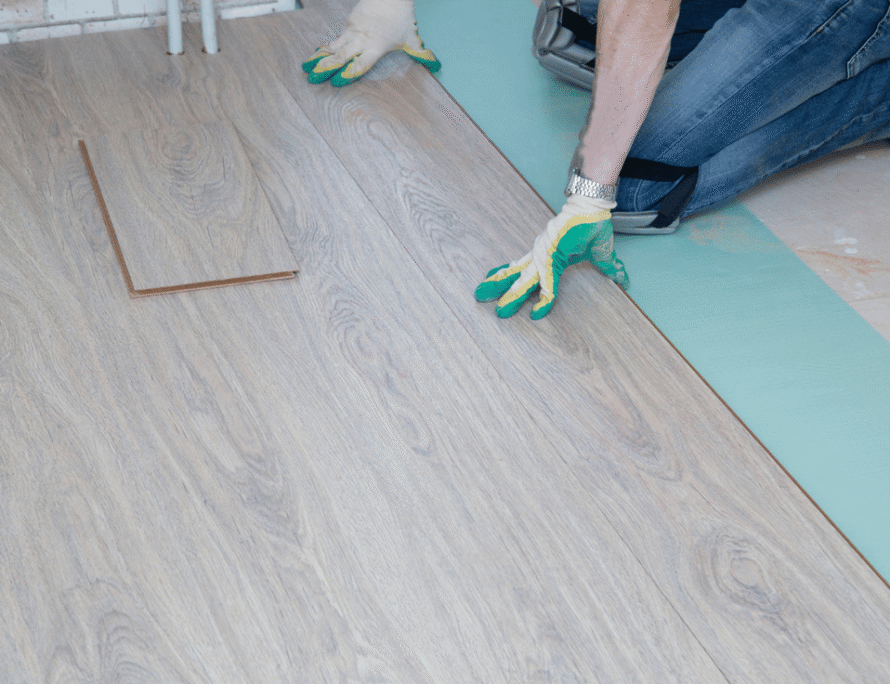
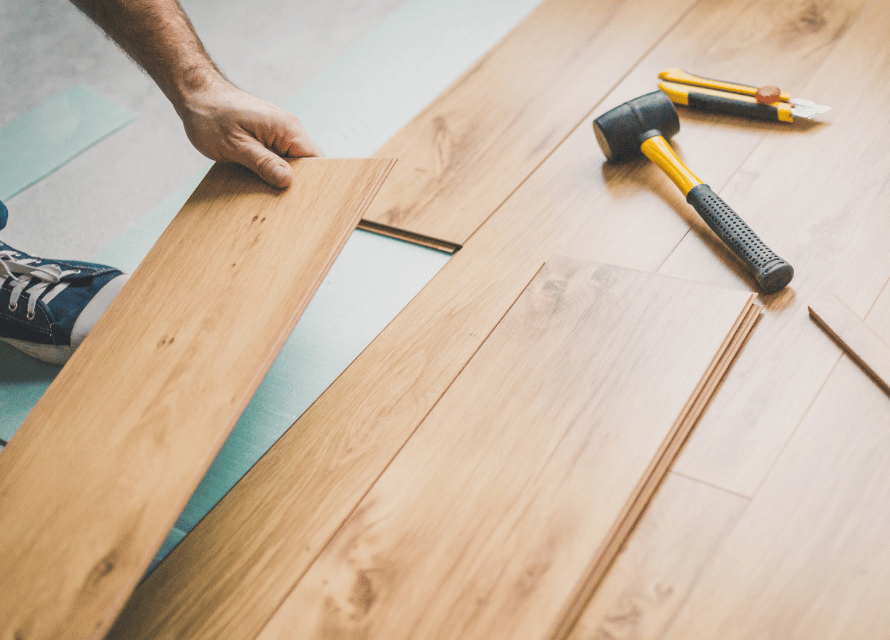
Hardwood vs engineered hardwood is one of the first decisions Bellevue and Kirkland homeowners face when they replace carpet or worn floors. Both are real wood on the surface, both look beautiful, and both add value. The difference is what sits underneath, and in the Pacific Northwest that difference decides where each floor will perform well for decades and where it will cup, gap or fail.
This guide compares the two side by side, explains how our damp winters and dry summers affect each one, and shows which floor fits each room in a typical Eastside home.
- 7 key differences at a glance
- How solid and engineered hardwood are made
- Hardwood vs engineered hardwood in the Pacific Northwest climate
- Which floor fits each room
- Cost comparison in Bellevue
- Hardwood installation in Bellevue: what to expect
- FAQs
Hardwood vs Engineered Hardwood: 7 Key Differences at a Glance
| Factor | Solid hardwood | Engineered hardwood |
|---|---|---|
| Construction | One solid piece of wood, usually 3/4 inch thick | Real wood wear layer bonded to a cross-ply plywood or HDF core |
| Moisture stability | Expands and shrinks more with humidity changes | Far more dimensionally stable |
| Installation methods | Nailed or stapled over a wood subfloor | Nailed, glued down or floated |
| Concrete and below grade | Generally not recommended | Suitable when the manufacturer allows it |
| Refinishing | Can be sanded many times over its life | Depends on wear layer: thicker layers allow one to three sandings |
| Installed cost (Seattle area) | $12–$30 per sq ft | $4.50–$16 per sq ft |
| Typical lifespan | Many decades with refinishing | Decades, largely set by wear layer thickness |
How Solid and Engineered Hardwood Are Made
Solid hardwood
Solid hardwood is milled from a single piece of lumber, most often oak, maple or hickory. Because the whole board is wood, it can be sanded and refinished many times. Many 1960s and 1970s homes in Bellevue still have original oak strip floors hidden under carpet, and refinishing them is often the most cost-effective upgrade in the house.
Engineered hardwood
Engineered hardwood has a top layer of real wood, usually 1 to 6 millimeters thick, glued to layers of plywood or high-density fiberboard that run in alternating directions. That cross-ply core resists the seasonal movement that makes solid boards cup or gap. From the surface you cannot tell the two apart once they are installed.
The wear layer is the number to compare. A 4 mm or thicker wear layer can usually be fully sanded more than once, while a 2 mm layer may only allow a light screen-and-recoat.
Hardwood vs Engineered Hardwood in the Pacific Northwest Climate
Eastside homes swing from damp, rainy winters to dry summers, and indoor humidity follows. Most wood flooring manufacturers specify an indoor relative humidity of roughly 30 to 50 percent. Solid boards absorb and release moisture across their full thickness, so a winter install that is too tight can cup, and a summer install that is too loose can show gaps in January.
Engineered hardwood moves much less, which is why it is the safer choice over concrete slabs, in daylight basements and over radiant heat. Either way, good installers test the subfloor with a moisture meter and let the flooring acclimate before installation. Our guide to the best flooring for Pacific Northwest homes covers moisture protection in more detail, and the National Wood Flooring Association publishes the installation standards most professionals follow.
Which Floor Fits Each Room in a Bellevue or Kirkland Home
- Main living areas over a wood subfloor: either works. Solid hardwood is a natural fit when you want to match or extend existing oak floors.
- Kitchens: engineered hardwood handles the small spills and humidity swings of a kitchen better, especially with a factory finish. See our kitchen remodeling page for how floors fit into the bigger project.
- Daylight basements and slab foundations: engineered hardwood or luxury vinyl plank. Solid wood is generally not recommended on concrete. Our basement remodel cost guide has more on below-grade spaces.
- Condos in Downtown Bellevue and Kirkland: concrete subfloors and HOA sound rules usually point to engineered hardwood over an approved acoustic underlayment. Check your HOA requirements before choosing.
- Bathrooms and laundry rooms: neither is ideal. Tile or waterproof vinyl is the better choice.
Hardwood vs Engineered Hardwood Cost in Bellevue
Installed prices in the Seattle area typically run $12 to $30 per square foot for solid hardwood and $4.50 to $16 for engineered hardwood, depending on species, plank width, finish and wear layer. For a 500 square foot main floor, that is roughly $6,000 to $15,000 for solid and $2,250 to $8,000 for engineered.
Removing old flooring, leveling the subfloor, stairs and new baseboards add to either total. For a full breakdown by material, see our flooring installation cost guide. If floors are part of a larger update, our main floor remodel cost guide shows how they fit into the overall budget.
Hardwood Installation in Bellevue: What to Expect
A typical hardwood installation in Bellevue starts with a moisture test of the subfloor, followed by acclimation of the flooring, removal of old floors, subfloor repairs and leveling, then installation and trim. Most main-floor projects take a few days of install time once the material has acclimated.
Every flooring project with Renovation WA starts with a free consultation, online by video call or at your home, with an interior designer and a craftsman together, so the look you want and the subfloor reality are worked out at the same time. There is no showroom overhead built into your price, and your schedule is 100% on time, written into your agreement. Learn more about our flooring installation in Bellevue or our work in Kirkland.
Hardwood vs Engineered Hardwood FAQs
Is engineered hardwood real wood?
Yes. The surface you walk on is a layer of real hardwood. Only the core underneath is made of plywood or fiberboard.
Can engineered hardwood be refinished?
Usually, if the wear layer is thick enough. Floors with a 3 to 4 mm or thicker wear layer can typically be sanded at least once. Thin wear layers may only allow a screen-and-recoat.
Which is better over radiant floor heat?
Engineered hardwood. Its cross-ply core handles temperature changes far better than solid wood. Always confirm the product is approved for radiant heat by the manufacturer.
Does engineered hardwood add as much resale value as solid?
Most buyers see both as hardwood floors, and both typically appeal more than carpet or laminate. Condition and finish matter more than construction for most buyers.