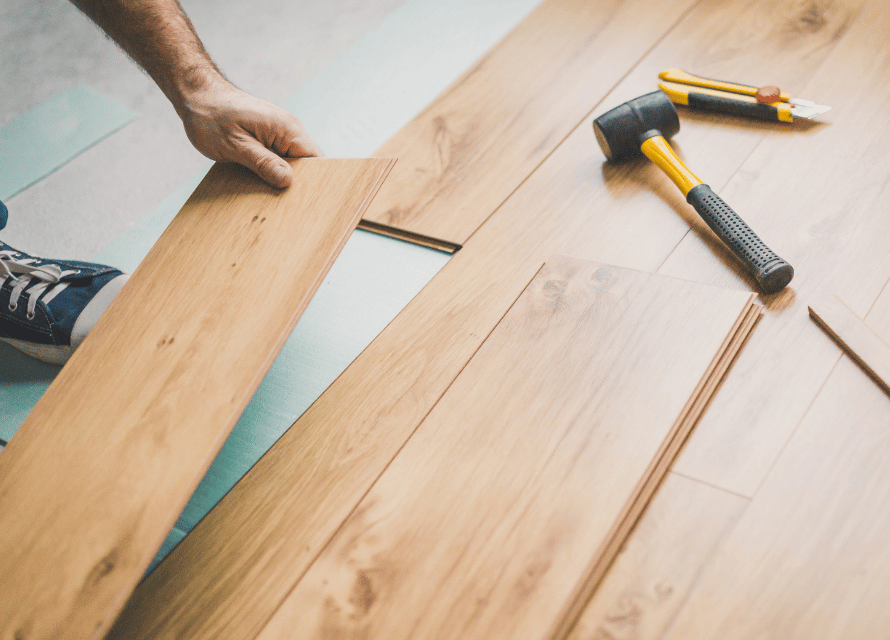
Choosing the best flooring for Pacific Northwest homes means planning for something most flooring guides ignore: months of damp, mild weather, wet shoes and pets coming in from the rain, and crawlspaces or slabs that hold moisture. The right floor stays flat, stable, and good-looking through a Bellevue winter; the wrong one can cup, gap, or grow mold within a few seasons.
This guide ranks the most popular options by how well they handle Northwest humidity, then shows which floor fits each room. For prices, see our flooring installation cost guide for Bellevue.
- How the Pacific Northwest Climate Affects Floors
- Best Flooring for Pacific Northwest Homes, Ranked
- 1. Engineered Hardwood
- 2. Luxury Vinyl Plank (Rigid Core)
- 3. Porcelain Tile
- 4. Solid Hardwood (With Precautions)
- 5. Water-Resistant Laminate
- Flooring to Use Carefully
- Best Flooring for Pacific Northwest Homes, Room by Room
- How to Protect Floors From Moisture
- Best Flooring for Pacific Northwest Homes: FAQs

How the Pacific Northwest Climate Affects Floors
The Seattle–Eastside climate is less about extremes and more about persistent moisture. Three things matter most for flooring:
- Long wet season: from fall through spring, outdoor humidity stays high and homes are closed up, so indoor moisture from cooking, showers, and drying laundry builds up.
- Seasonal swings: wood absorbs moisture in the damp months and releases it when heating runs or summer dries things out — which causes cupping in winter and gaps in summer.
- Crawlspaces and slabs: many older Eastside homes sit over crawlspaces, and daylight basements often have concrete slabs, both of which can push moisture up into the floor.
The U.S. EPA recommends keeping indoor relative humidity below 60%, ideally between 30% and 50% — a range that also keeps most flooring stable.
Best Flooring for Pacific Northwest Homes, Ranked
| Rank | Flooring | Moisture tolerance | Best for |
|---|---|---|---|
| 1 | Engineered hardwood | Good — stable plywood core | Main living areas, kitchens, over slabs |
| 2 | Rigid-core LVP | Waterproof | Whole home, basements, mudrooms, pets |
| 3 | Porcelain tile | Waterproof | Bathrooms, laundry, entries |
| 4 | Solid hardwood | Fair — needs humidity control | Above-grade living rooms and bedrooms |
| 5 | Water-resistant laminate | Moderate | Budget whole-home updates, upper floors |
1. Engineered Hardwood
Engineered hardwood has a real wood wear layer bonded to a cross-ply core, so it expands and contracts far less than solid wood. That makes it the best all-around choice for Northwest homes that want real wood — including over concrete slabs and radiant heat, where solid wood isn’t recommended. White oak with a matte finish is the most popular look in Bellevue remodels. Choose a thicker wear layer (3mm or more) if you want the option to refinish later.
2. Luxury Vinyl Plank (Rigid Core)
Rigid-core LVP (SPC or WPC) is fully waterproof, handles muddy paws and wet boots, and doesn’t care about humidity swings. It’s the easiest recommendation for daylight basements, mudrooms, rentals, and busy family homes. Look for a wear layer of 20 mil or more and an attached underlayment. The trade-off: it can’t be refinished, and it doesn’t carry the resale weight of real wood in upper-segment homes.

3. Porcelain Tile
Porcelain tile is dense, waterproof, and virtually unaffected by humidity. It’s the standard for bathrooms, laundry rooms, and entries — and wood-look porcelain planks bring the warmth of wood into wet areas. Pair it with radiant floor heat to solve the one real downside in a cool climate: cold floors. It’s also the natural choice for walk-in showers and bathroom remodels.
4. Solid Hardwood (With Precautions)
Solid hardwood still works well in the Northwest — many Bellevue homes have decades-old oak floors in great shape. The keys are installing it only above grade, letting it acclimate on site, choosing narrower planks (they move less), and running a dehumidifier or HVAC humidity control through the wet months. The National Wood Flooring Association (NWFA) publishes installation guidelines contractors should follow for moisture testing and acclimation.
5. Water-Resistant Laminate
Newer laminates with sealed edges and water-resistant cores handle spills far better than older products and cost less than most alternatives. They’re a solid budget option for bedrooms and upper floors, but they’re less forgiving than LVP if water sits on the surface, so avoid them in bathrooms and laundry rooms.
Flooring to Use Carefully
- Solid hardwood below grade or over slabs — moisture from concrete can cause cupping.
- Carpet in basements and entries — it traps moisture and can harbor mold in damp areas.
- Natural stone that isn’t sealed — porous stones absorb water and stain; seal regularly.
- Cheap vinyl with thin wear layers — it scratches easily from grit tracked in on rainy days.
Best Flooring for Pacific Northwest Homes, Room by Room
| Room | Best choice | Runner-up |
|---|---|---|
| Living and dining | Engineered hardwood | Solid hardwood |
| Kitchen | Engineered hardwood or LVP | Porcelain tile |
| Bathrooms | Porcelain tile | Rigid-core LVP |
| Bedrooms and closets | Engineered or solid hardwood | Carpet or laminate |
| Daylight basement | Rigid-core LVP | Porcelain tile |
| Mudroom and entry | Porcelain tile | Rigid-core LVP |
Carrying one floor from the bedroom into the closet makes both spaces feel larger — one of our favorite walk-in closet ideas. In kitchens, flooring choice should also work with your countertop material and cabinetry.
How to Protect Floors From Moisture
- Test subfloor and slab moisture before installation — especially in older homes.
- Install a vapor barrier in crawlspaces and use the right underlayment over concrete.
- Let wood and some vinyl products acclimate on site before installation.
- Keep indoor humidity in the 30%–50% range with ventilation, bath fans, or a dehumidifier.
- Use mats at every entry and a boot tray for rainy days. For a full pre-winter list, see our fall home renovation checklist.
Planning new floors throughout the house? Our whole house remodel checklist covers subfloor and moisture checks alongside every other room-by-room decision.
Renovation WA provides flooring installation in Bellevue and across the Eastside — including Kirkland, Somerset, and Crossroads — with moisture testing on every job and our 100% on-schedule guarantee.
Best Flooring for Pacific Northwest Homes: FAQs
What is the best flooring for a damp climate?
Rigid-core LVP and porcelain tile are fully waterproof and the safest choices for damp areas. For real wood, engineered hardwood is much more stable than solid hardwood.
Is hardwood a good idea in Seattle and Bellevue?
Yes, when it’s installed above grade, acclimated properly, and paired with indoor humidity control. Engineered hardwood is the lower-risk way to get a real wood floor.
What flooring is best for a basement in the Pacific Northwest?
Rigid-core LVP is usually the best fit because it’s waterproof and comfortable underfoot. Porcelain tile is a durable alternative. Avoid solid hardwood and carpet below grade.
Does flooring need to acclimate before installation?
Wood floors almost always do, and some vinyl products recommend it. Follow the manufacturer’s instructions — acclimation helps prevent gaps and cupping after installation.
Not sure which floor fits your home? Book a free flooring consultation with our Bellevue team.